1939
The founding of the freight forwarding company
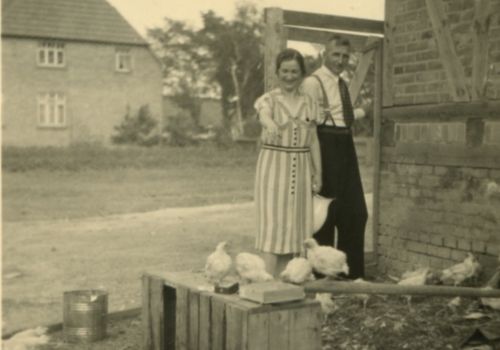
Albert Schnellecke and his wife found the Albert Schnellecke freight forwarding company. A contract with the Reichsbahn officially makes the company a railway-approved haulage company. It also takes on furniture transport. The couple initially lived in a furnished room on a farm and later moved to an apartment in the city center, which remained Margarete Schnellecke's home for decades. Rolf Schnellecke later recalls that at that time, the city had not yet grown; the foundation stone had only been laid shortly before.
1940 to 1944
War years and everyday family life
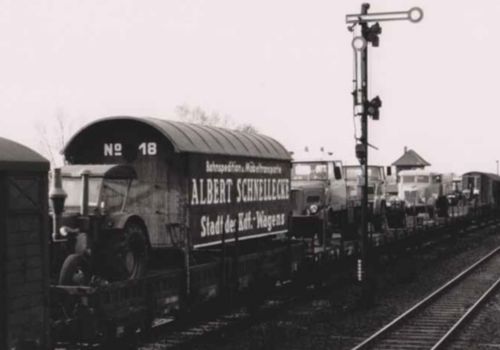
The young company quickly felt the effects of the war. The vehicle fleet was confiscated, leaving only horses and agricultural carts. Margarete Schnellecke had two children during this time, Annegret in 1942 and Rolf in 1944. Albert Schnellecke was exempted from military service for the sake of the business, but was called up for anti-aircraft duty.
1945 to 1949
A new beginning under difficult conditions
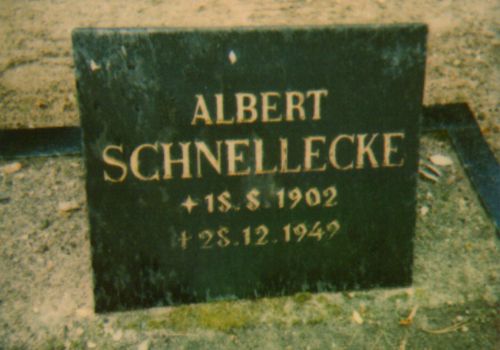
In 1945, Albert and Margarete Schnellecke are left with nothing. Their business premises have been looted and their horse-drawn carts have disappeared, but they nevertheless begin to rebuild. In the same year, the Volkswagen factory is liberated by US troops and the city is officially renamed Wolfsburg. In 1949, the new beginning was abruptly interrupted. Albert Schnellecke died of pneumonia. At that time, the children were only four and six years old. Rolf Schnellecke later described how challenging this phase was for his mother and the company.
1949
Margarete Schnellecke takes over responsibility
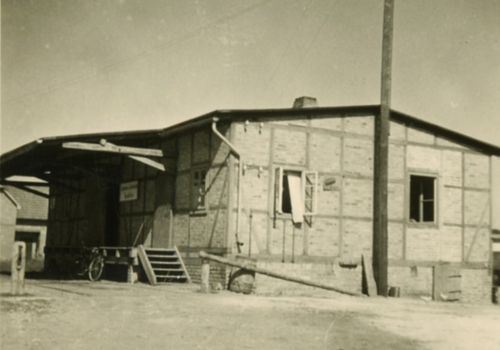
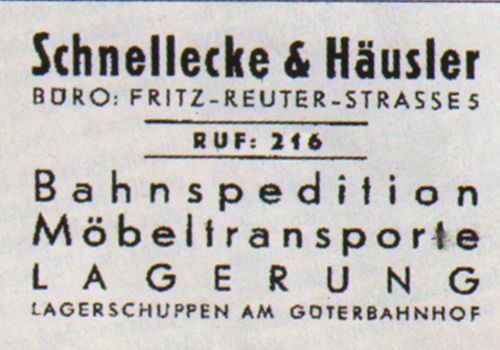
After her husband's death, Margarete Schnellecke took over the company's business, even though she had no professional or educational background in freight forwarding. The railway provided unheated goods sheds as storage and handling rooms. While the economic miracle was already making itself felt elsewhere, she worked daily in the small office at the freight station to secure the company's future. Rolf Schnellecke later praised her achievement as extraordinary, because she ran the company alone for almost two decades and then for several more years as senior manager.
1950s
Growth in a growing city
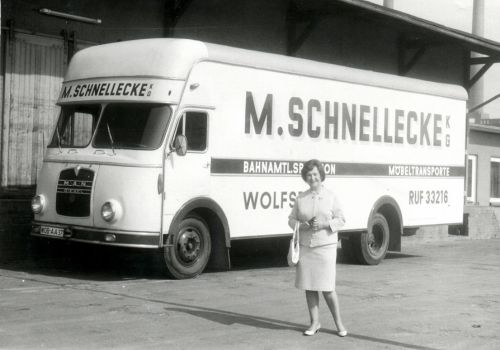
With construction activity in Wolfsburg on the rise, the volume of orders increases. Furniture transport increases, and mail order companies such as Quelle and Neckermann commission Schnellecke with delivery ( ). Many roads are only paved once the houses are already finished. Trucks often get stuck in sand, gravel, or mud, but business continues nonetheless. Margarete Schnellecke keeps the company running, and Rolf Schnellecke helps out while still at school, taking on office tasks and later learning how to repair the vehicles.
1960 to 1967
Structures grow with the business
At the beginning of the 1960s, the fleet consists of four vehicles. In the following years, the family builds its own office with storage rooms. In 1967, M. Schnellecke KG is founded and the business is expanded to include local freight transport. With trips throughout Germany, more lucrative contracts become possible, initially mainly in furniture transport, later also in freight transport.
1968 to 1983
Courage to expand
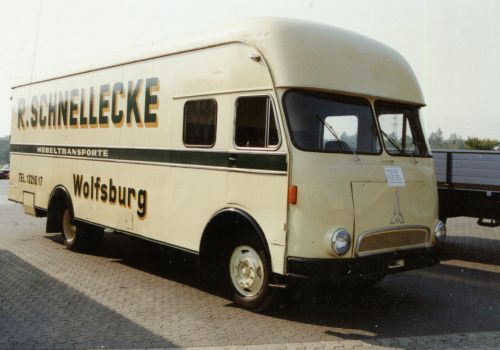
In 1968, at the age of 22, Rolf Schnellecke founded the company Rolf Schnellecke. At the beginning of the 1970s, the first international transport to Sarajevo took place, with Rolf Schnellecke himself at the wheel. At the end of the 1970s and beginning of the 1980s, regular transports to Belgium, Spain, and Yugoslavia followed. Rolf Schnellecke later described how the spirit of optimism during those years gave him the courage to push ahead with the company.
1984 to 1989
A new location in Sandkamp
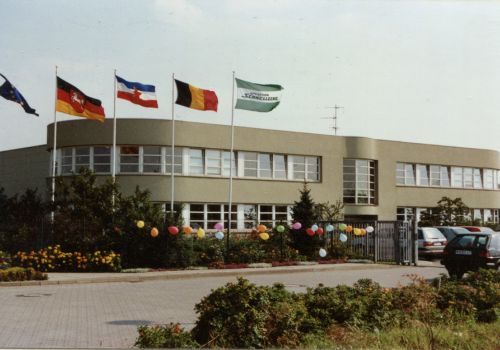
As the number of transport orders increased, so did the number of employees. In 1985, Schnellecke relocated the entire business to Sandkamp, to a newly built freight forwarding facility with an office building, warehouse, workshop, wash bay, and gas station. Despite its rapid growth, Schnellecke initially remained primarily a transport company. This changed at a time when Germany was undergoing political upheaval and reunification opened up new opportunities.
1990 to 1991
Opportunity through reunification
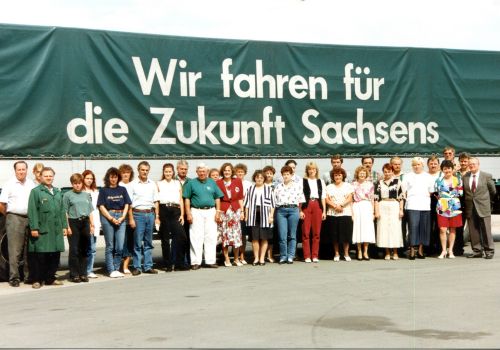
Schnellecke now has around 180 employees. After the opening of the inner-German border, the company seizes the opportunity to expand and takes over the vehicle fleets and employees of former VEB companies. In the following years, several companies are merged. At the same time, new vehicle production facilities are being built in the Zwickau region. In order to create additional logistics space, a site in Glauchau in dire need of renovation is purchased in 1991. The decision proves to be an important step, as Saxony becomes increasingly important for the automotive industry. During this phase, the company founded its own logistics company, BMG Baugruppen und Modulfertigung GmbH.
1992 to 1993
From freight forwarder to logistics provider
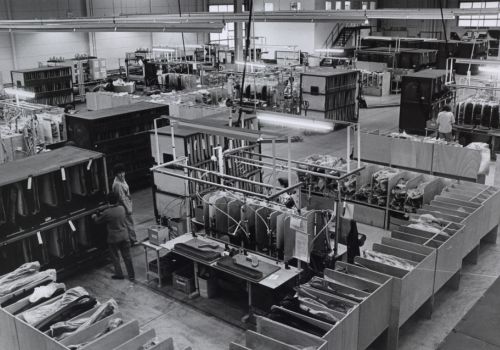
Until the 1990s, Schnellecke is a freight forwarding company. Assembly parts are delivered to the Volkswagen factory, initially sorted by type and later optimized for consumption. In 1992, the pre-assembly of doors and side panels for the Golf 3 is outsourced and put out to tender. Schnellecke takes on the task and faces a new level of complexity in terms of control times and variant diversity. With the Montagen Nord project and the integration of value creation into logistics, the company successfully made the transition from freight forwarder to logistics provider. The concept was later adopted in many other areas and is now considered the standard in modern automotive logistics. In 2018, Prof. Rolf Schnellecke was inducted into the Logistics Hall of Fame for his achievements.
1994 to 1995
Portfolio grows, internationalization begins
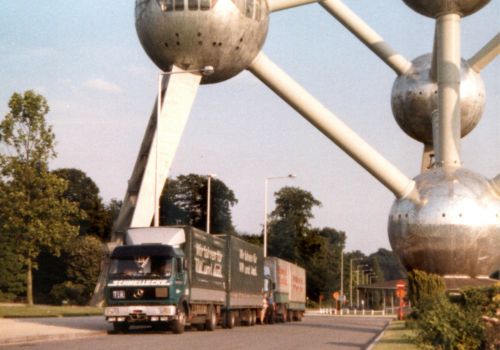
New opportunities arise in Saxony. Schnellecke takes over Karosseriewerke Dresden, whose roots go back to carriage building and which has established itself as a manufacturer of automobile bodies. With the development of further production competencies, the company succeeds in operating as a producer in addition to logistics. Internationally, new companies are established in Spain at almost the same time. The first foreign branch is founded in Belgium. In addition, Schnellecke wins its first CKD contract for Volkswagen in Spain in 1994. This is followed in 1995 by the CKD project for the Audi A4 in South Africa, combined with the establishment of its own local company.
1996 to 1999
New markets, new locations
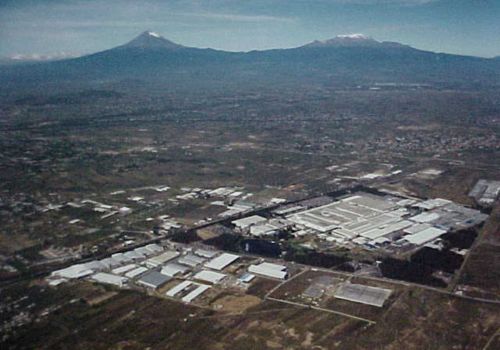
In 1997, the company expanded into Mexico with the establishment of a joint venture in Puebla. The first orders came from Volkswagen de México, and the company later also acquired customers from the consumer goods segment. In 1998, another Spanish company was established, covering a wide range of services. At the same time, the company set its sights on Brazil. It initially familiarized itself with the market through a consortium, and in 1999, a joint venture with a Brazilian partner was established. In the same year, the first companies are also founded in Poland and Slovakia, among other things for logistics services for Volkswagen locations and other industrial companies.
2000 to 2005
Foundation, generational change, and new states
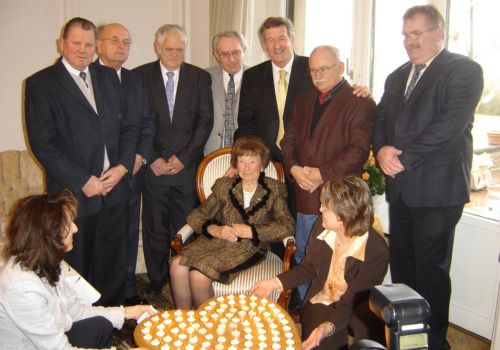
In 2000, on her 95th birthday, Margarete Schnellecke established a foundation named after her to provide social support for senior citizens, children, and young people in the Wolfsburg area. In 2002, the third generation took over responsibility for the family business. In the same year, a joint venture was established in Dalian, China. In 2004, the first branch in Italy was established in Sant'Agata Bolognese. In 2005, a grand concert was held in Wolfsburg to celebrate Margarete Schnellecke's 100th birthday. She passed away in December 2005. Her commitment and understanding of social responsibility continue to shape the company to this day.
2006 to 2010
Strategy and new structures
In 2006, Schnellecke initiates the WIR corporate strategy, focused on growth, innovation, and profitability. In 2007, the Schnellecke Group was restructured as a family holding company. New companies for logistics, freight forwarding, production, and real estate were created under its umbrella, and Nikolaus Külps became CEO. In 2009, Schnellecke of America LLC is founded and a joint venture with Kenco is established. Also in 2009, a company is established in Hungary. 2010 sees the start of a new partnership with a joint venture in India. A CKD hall for Volkswagen India is operated in Pune.
2011 to 2018
Awards and new responsibilities
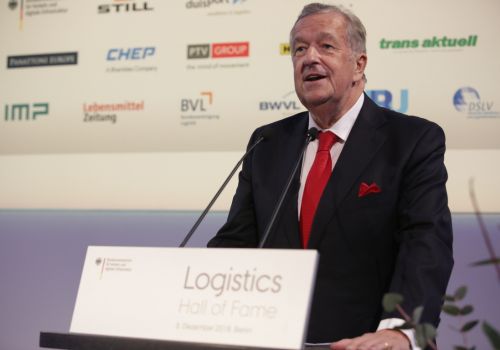
In 2011, Schnellecke becomes a system partner for Volkswagen in Wolfsburg and, in addition to assembly and delivery, also takes over the procurement of necessary parts. In 2014, the company celebrates 75 years of Schnellecke and 150 years of KWD. In 2015, it receives the Volkswagen Group Award. In 2018, Prof. Rolf Schnellecke is inducted into the Logistics Hall of Fame. He is honored in particular for his formative contributions to automotive logistics.
2019 to 2024
Digitalization, new business models, anniversary
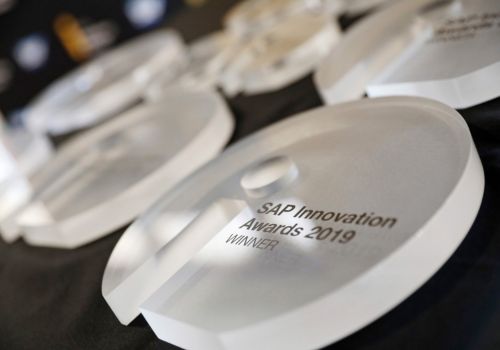
In 2019, Schnellecke receives the SAP Innovation Award as Process Innovator for IoT container tracking. In 2020, the coronavirus pandemic poses new challenges for global supply chains. During this time, Schnellecke Real Estate is founded, including the Wolfsburg Warmenau logistics center project. In 2022, the SAP Innovation Award is won as Transformation Champion for the Digital Control Tower. In 2023, CREATBLUE GmbH is established. In 2024, Brighten GmbH follows as a joint venture for business and technology consulting. In the same year, Schnellecke celebrates its 85th anniversary.